+80°
🔋Batteries
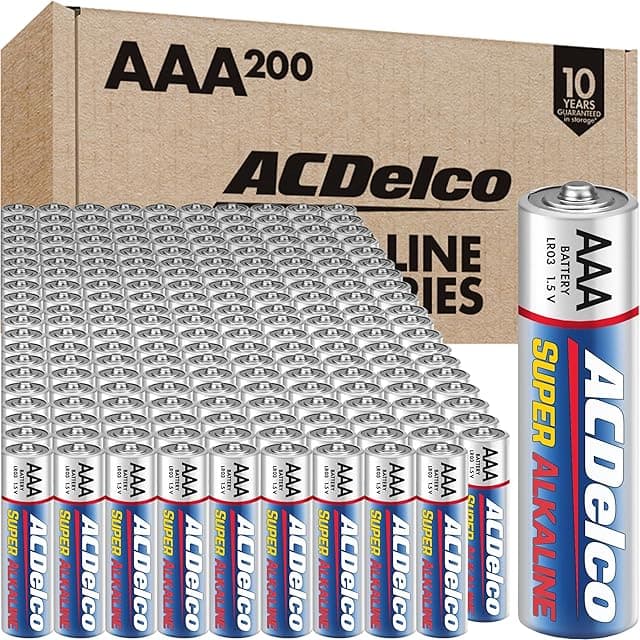
ACDelco AAA Batteries, Maximum Power Super Alkaline Battery…
$0.25Cost / battery
Price checked Jul 21 · confirm on Amazonpack price$49.99
subscribe & save$0.24−5%
ACDelco · Amazon
See on Amazon Every common consumer battery, by dimensions, voltage and capacity — from AA and AAA to C, D, 9V and the coin cells. Sizes are not interchangeable: a device is built for one form factor. Below is the full reference, plus the cheapest real cost per battery we track for the everyday sizes.
| Size | IEC | Voltage | Dimensions | Capacity (mAh) | Common uses | Cheapest |
|---|---|---|---|---|---|---|
| AA | LR6 | 1.5V | 50.5 × 14.5 mm | ~1,800–2,700 | Remotes, toys, flashlights, controllers | $0.31/ea |
| AAA | LR03 | 1.5V | 44.5 × 10.5 mm | ~850–1,200 | Remotes, small electronics, mice | $0.25/ea |
| C | LR14 | 1.5V | 50 × 26.2 mm | ~6,000–8,000 | Larger flashlights, radios, toys | — |
| D | LR20 | 1.5V | 61.5 × 34.2 mm | ~12,000–18,000 | High-drain flashlights, boomboxes | — |
| 9V | 6LR61 | 9V | 48.5 × 26.5 × 17.5 mm | ~500–600 | Smoke detectors, multimeters | — |
| CR2032 | CR2032 | 3V | 20 × 3.2 mm (coin) | ~225 | Key fobs, watches, motherboards | — |
| CR123A | CR17345 | 3V | 34.5 × 17 mm | ~1,500 | Cameras, tactical flashlights, sensors | — |
| AAAA | LR61 | 1.5V | 42.5 × 8.3 mm | ~600 | Styluses, laser pointers | — |
Dimensions are the IEC/ANSI standard; capacity is typical alkaline (rechargeable NiMH differs). Prices are the cheapest real cost per cell we track, live from Amazon US, alkaline only — a dash means we don’t track that size.
Live from the catalog, ranked by real cost per battery — cheapest first.
ACDelco AAA Batteries, Maximum Power Super Alkaline Battery…
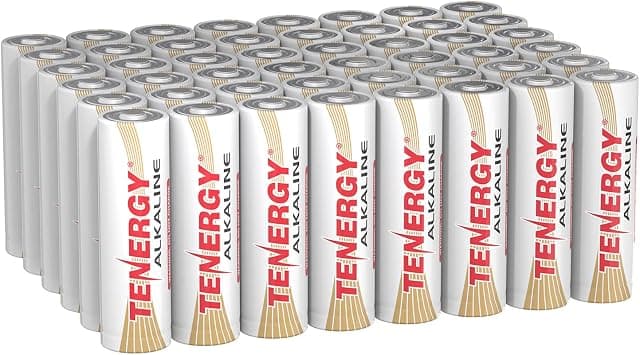
Tenergy 1.5V AA Alkaline Battery
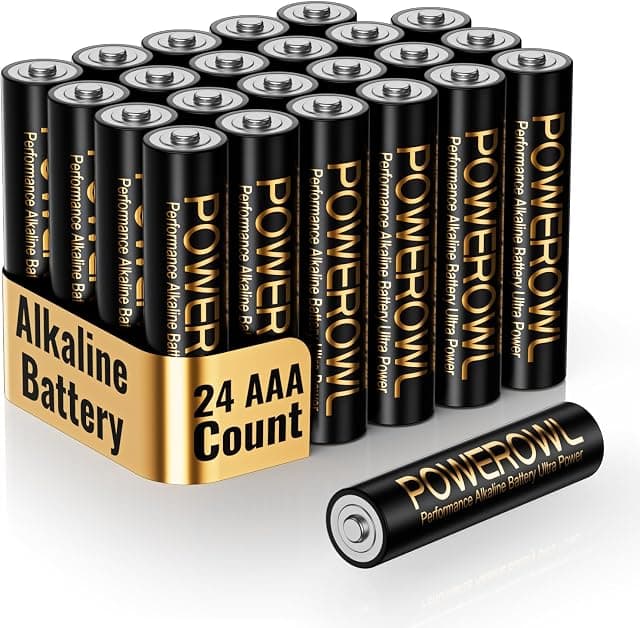
POWEROWL High-Capacity Alkaline AAA Batteries 24 Pack
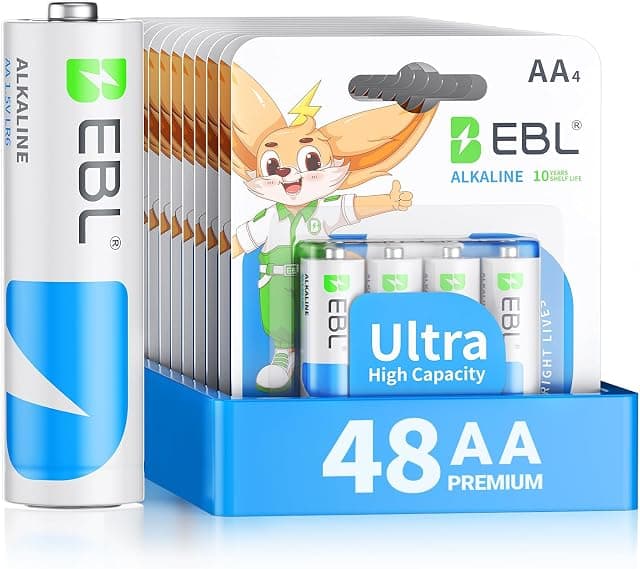
EBL AA Batteries 48 Pack Alkaline Double A Batteries Ultra…
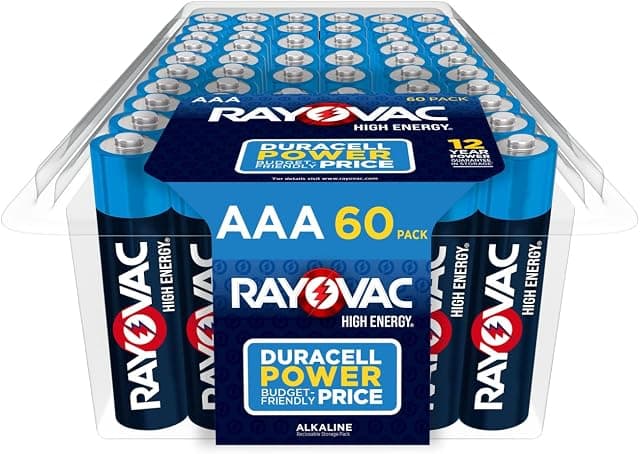
Rayovac High Energy AAA Batteries (60 Pack)
The one number that matters when you restock is cost per battery, and the pack size hides it: the same AA can cost 3× more per cell in a 4-pack than a 48-pack. Alkalines keep for a decade in a cool drawer, so the big pack is almost always the right buy — the checkout 4-pack is the most expensive way to own a battery.
Both are 1.5V, but AA is physically larger (50.5 × 14.5 mm) and holds more energy — roughly 1,800–2,700 mAh versus 850–1,200 mAh for AAA (44.5 × 10.5 mm). They are not interchangeable: a device is built for one size. AA lasts longer between changes because it holds more charge.
For everyday alkaline use — remotes, clocks, toys — store brands run about half the cost per cell of name brands and use the same alkaline chemistry, so the difference is mostly the label. Lithium (e.g. Energizer Ultimate) costs more per cell but lasts far longer in high-drain gear like cameras and cold-weather sensors — that is a cost-per-hour win, not a cost-per-battery one.
Most smoke detectors use a 9V battery (48.5 × 26.5 × 17.5 mm), though many newer models use two or three AAs. Use lithium for smoke detectors if the manufacturer allows it — it holds voltage far longer, so the low-battery chirp comes years later instead of months.